Outcomes & Stories
July 16, 2026

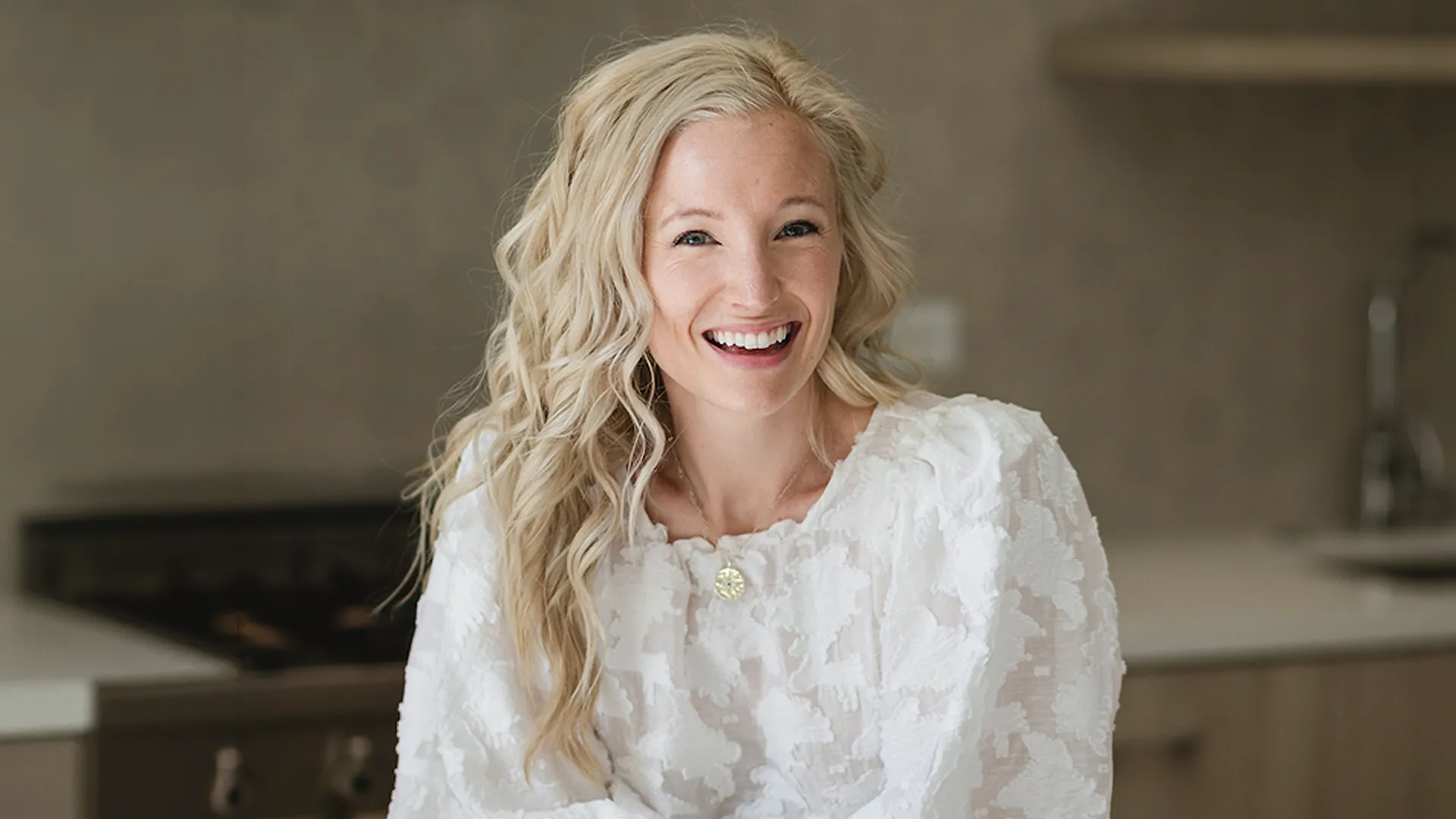




As soon as I heard the news, my mind raced toward the second half of my life. I found myself gripping a future I hadn't even reached yet, already grieving the moments I might lose with my two young children, my husband, and the people I love most.
I had recently discovered that I carry one copy of the APOE4 genotype - a genetic variant associated with an increased risk of developing Alzheimer’s disease and dementia. [1]
As a Dietitian at Biograph, I am all too familiar with the weight of this gene. I know the statistics inside and out, including the sobering reality that women face a higher risk of developing these diseases than men. [2] But after the initial wave of overwhelm subsided, the clinician in me kicked in. I was reminded of the exact scientific truth I counsel our members on every single day: your DNA is a blueprint, not your destiny.
The lifestyle habits I prioritize to support brain health
Research suggests that healthy lifestyle habits may reduce dementia risk, including individuals with genetic risk factors such as APOE4. [3]
Here are a few of my foundational pillars:

Nutrition
I prioritize a Mediterranean/MIND eating pattern that focuses on fibrous, nutrient-dense, anti-inflammatory, and low-glycemic load foods.

Movement
I polarize my training to challenge my heart, muscles and brain - something our Exercise Physiologists at Biograph have counseled me on beautifully.

Rest
I protect my sleep quality and depth whenever it’s within my control (of course my little kids have different plans for me some nights).

Alcohol
I’ve never enjoyed drinking so this hasn’t been difficult, though I’m reassured that this choice I made a long time ago will continue to serve me for decades, as research suggests APOE4 carriers may be more susceptible to some of alcohol’s adverse effects on brain health. [4].

Cognitive Demand
Showing up for a complex, cognitively challenging career, which itself serves as a protective shield against neurocognitive decline.
Embracing these lifestyle habits shouldn’t turn into an obsession, either. I still savor the moments I have ice cream with my family in the summer and popcorn on a movie night. Longevity isn't built on absolute perfection, it’s a product of averages over time.
The micro-decisions we make every single day accumulate into powerful momentum. It is this daily momentum that ultimately dictates how much influence our genes actually have over our future.
Some argue that knowing this level of deep biometric detail is paralyzing. I actually argue the exact opposite. When you have this level of clarity, you are handed the keys to your own future. You can show up every day and be fierce about caring for every system in your body, knowing you are actively setting up the 80+-year-old version of yourself with intention.
For decades, women have been conditioned to believe that the ultimate goal of nutrition and movement is to become as thin as possible. At Biograph, we completely move past that outdated paradigm.
We don't focus on shrinking. We focus on supporting the collective vitality of our systems. We ask our members: What do you want the quality of your life to look like as you age, and how can we maximize the quality of those years for as long as possible?
So when I answer these questions for myself, knowing I may be at higher risk of developing Alzheimer's disease and dementia if I’m not intentional, I choose to fuel myself, move and rest my body not to squeeze into a small pant size. I choose these levers because they provide my systems with the greatest protection against decline:
I want my brain to function sharply for as long as possible so I can squeeze every single bit of joy out of every day with the people, places, and food I love the most.
I want my heart to beat with maximum efficiency without burden, because I know when I care for my heart, my brain significantly reaps benefits, too.
I know I can’t afford to be weighed down by metabolic dysfunction and systemic inflammation, as this only adds fuel to the neurocognitive risk ‘fire’.
I’ve always valued my health, but this new insight adds a whole new level of purpose for how I show up for myself and health each day. What initially felt like a health scare has truly become a gift that now forces me to be even more intentional with my choices, to never take my health for granted with the sole purpose of maximizing the quality and quantity of my time with the people I’d do anything for, for as long as possible.
Why brain health matters long before symptoms appear
Alzheimer’s disease and other forms of dementia do not develop overnight. Research suggests that biological changes in the brain can begin years (even decades) before cognitive symptoms become noticeable.
This is one reason why prevention has become such an important focus of modern brain health research. While no single intervention can eliminate risk, evidence increasingly supports the role of several modifiable lifestyle factors, including:
These factors not only support brain health, but also contribute to healthier aging overall. Many of the same habits associated with reduced dementia risk are also linked to improved cardiovascular, metabolic, and physical health.
The Biograph approach: Turning health insights into action
At Biograph, we believe health data should provide clarity, not fear.
Whether the insight comes from genetic testing, advanced bloodwork, imaging, body composition analysis, or physiological testing, the goal is to understand what that information means and how it can be used to support better long-term outcomes.
For some members, that may mean identifying elevated cardiovascular risk. For others, it may mean addressing metabolic dysfunction, improving fitness, or developing a personalized strategy to support healthy aging and brain health.
Maura’s story illustrates an important principle we discuss with members every day: information alone does not change outcomes. Action does.
The most powerful health insights are those that help people make informed decisions, build sustainable habits, and take ownership of their future health before disease develops.
Commonly asked questions about brain health and genetics
What is the APOE4 gene?
The APOE4 gene is a variant of the apolipoprotein E (APOE) gene, which helps transport cholesterol and other fats throughout the body. Carrying one or two copies of APOE4 is associated with an increased risk of developing Alzheimer’s disease compared to people who do not carry the variant. However, APOE4 is considered a risk factor—not a diagnosis—and many people with APOE4 never develop dementia.
Does having APOE4 mean you will develop Alzheimer’s disease?
No. Carrying the APOE4 gene increases your risk of Alzheimer’s disease, but it does not guarantee that you will develop it. Genetics are only one piece of the puzzle. Factors such as cardiovascular health, sleep quality, physical activity, nutrition, metabolic health, and cognitive engagement can all influence long-term brain health. Many people with APOE4 remain cognitively healthy throughout their lives.
Can lifestyle changes reduce APOE4-related risk?
Research suggests that healthy lifestyle habits may help reduce the risk associated with APOE4. Regular exercise, a nutrient-dense dietary pattern such as the Mediterranean or MIND diet, quality sleep, avoiding smoking, limiting alcohol consumption, and managing cardiovascular and metabolic risk factors have all been associated with better brain health outcomes. While no lifestyle intervention can eliminate genetic risk entirely, these habits may help support cognitive function and healthy aging over time.
Why are women more affected by APOE4?
Research suggests that women who carry the APOE4 gene may have a greater risk of developing Alzheimer’s disease than men with the same genetic profile. Scientists are still working to understand the reasons behind this difference, but hormonal changes associated with menopause, along with differences in brain metabolism and longevity, may play a role. This is one reason why proactive brain health strategies are especially important for women as they age.
What lifestyle habits are most important for brain health?
No single habit determines brain health. The strongest evidence supports a combination of healthy behaviors, including regular physical activity, resistance training, adequate sleep, a Mediterranean-style eating pattern, social connection, lifelong learning, and managing cardiovascular risk factors such as blood pressure, cholesterol, and blood sugar. Consistency matters more than perfection. Small, sustainable habits practiced over time can have a meaningful impact on long-term cognitive health and healthy aging.
Maura Rodgers, RD, CHC
Lead Dietitian at Biograph
Maura Rodgers is Biograph’s Lead Dietitian, specializing in personalized nutrition strategies designed to optimize metabolic health, performance, and longevity. Her work focuses on translating complex health data into practical, evidence-based nutrition and behavior change programs that help individuals improve long-term health outcomes.
Clinical references
Belloy ME, Napolioni V, Greicius MD. A quarter century of APOE and Alzheimer’s disease: progress to date and the path forward. Neuron. 2019;101(5):820-838. doi:10.1016/j.neuron.2019.01.056
Altmann A, Tian L, Henderson VW, Greicius MD; Alzheimer's Disease Neuroimaging Initiative Investigators. Sex modifies the APOE-related risk of developing Alzheimer disease. Ann Neurol. 2014;75(4):563-573. doi:10.1002/ana.24135
Lourida I, Hannon E, Littlejohns TJ, et al. Association of Lifestyle and Genetic Risk With Incidence of Dementia. JAMA. 2019;322(5):430-437. doi:10.1001/jama.2019.9879
Kivipelto M, Rovio S, Ngandu T, et al. Apolipoprotein E epsilon4 magnifies lifestyle risks for dementia: a population-based study. J Cell Mol Med. 2008;12(6B):2762-2771. doi:10.1111/j.1582-4934.2008.00296.x